Jade vs Jadeite: What’s the Difference and Which Should You Choose?
If you’ve ever shopped for a jade pendant or tried to learn about Chinese jade, you’ve probably come across two words that seem almost interchangeable: jade and jadeite. Are they the same thing? Is one better than the other? And why does the distinction matter when you’re buying?
The short answer: jadeite is one specific type of jade — and understanding the difference can be the key to making a much smarter purchase. In this guide, we’ll break down jade vs jadeite in clear, practical terms: what each one is, how they compare, and which is right for you.
What Is “Jade”? The Umbrella Term Explained
In the broadest sense, “jade” refers to two distinct minerals that have both been used in Chinese culture and jewelry for thousands of years:
- Nephrite — a calcium magnesium silicate mineral
- Jadeite — a sodium aluminum silicate mineral
Not sure where to start? Read our complete beginner’s guide to Chinese jade — it covers everything from history to the Four Famous Jades of China.
Both are called “jade” in common usage, but they are chemically different stones with different properties, origins, and price ranges. For centuries, both were treasured in China as yù (玉) — the precious stone that symbolized virtue, heaven, and imperial power.
Historically, most “jade” artifacts in China — including the famous Han Dynasty burial suits, ceremonial blades, and imperial seals — were carved from nephrite. Jadeite only became widely available in China after the 18th century, when trade routes from Myanmar opened up. Once it arrived, its vivid greens captivated the imperial court, and Imperial Green jadeite became the most prized gem in Chinese history.
What Is Nephrite Jade?
Nephrite is the older, more historically significant form of jade. It’s composed of interlocking fibrous crystals of tremolite and actinolite, which give it exceptional toughness — nephrite is one of the toughest natural stones on earth, even though it’s not particularly hard.
Key Properties of Nephrite
| Property | Nephrite |
|---|---|
| Mineral type | Calcium magnesium silicate (amphibole group) |
| Hardness | 6.0–6.5 on the Mohs scale |
| Density | 2.90–3.10 g/cm³ |
| Toughness | Exceptional (fibrous interlocking crystals) |
| Color range | White, cream, spinach green, yellow, black, gray |
| Typical sources | China (Xinjiang, Qinghai), Canada, Russia, New Zealand |
| Luster | Waxy to silky |
| Price range | Moderate — high-quality “mutton fat” nephrite commands premium prices |
Famous Varieties of Nephrite
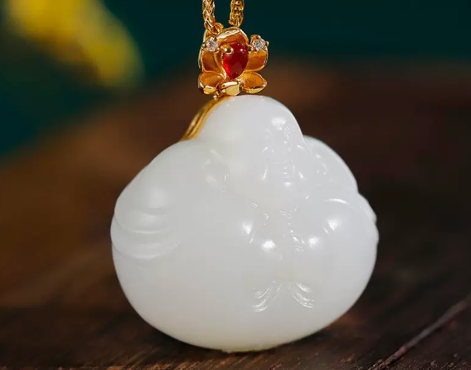
- Mutton Fat Jade (羊脂玉) — Pure white nephrite from Xinjiang’s Hotan River. The most prized nephrite variety; top-grade pieces rival jadeite in price.
- Spinach Jade — Dark forest green nephrite; widely used in carvings and figurines.
- Dushan Jade (独山玉) — A multicolored nephrite-related stone from Nanyang, Henan, used in Chinese culture since the Neolithic period. Learn more in our Chinese Jade Guide →
- Canadian Jade / Russian Jade — Lower-grade nephrite used in mass-market jewelry and carvings.
What Is Jadeite?
Jadeite is the rarer, more recently prized form of jade. It belongs to the pyroxene mineral group and has a granular, interlocking crystal structure rather than the fibrous structure of nephrite.
Key Properties of Jadeite
| Property | Jadeite |
|---|---|
| Mineral type | Sodium aluminum silicate (pyroxene group) |
| Hardness | 6.5–7.0 on the Mohs scale |
| Density | 3.20–3.40 g/cm³ (noticeably heavier than nephrite) |
| Toughness | Good (less tough than nephrite despite higher hardness) |
| Color range | Imperial green, lavender, white, yellow, black, red-orange (rare) |
| Typical sources | Myanmar (Burma) — nearly all gem-quality jadeite |
| Luster | Vitreous (glassy) to greasy |
| Price range | Very high — top Imperial Green jadeite is among the world’s most expensive gems |
Famous Varieties of Jadeite
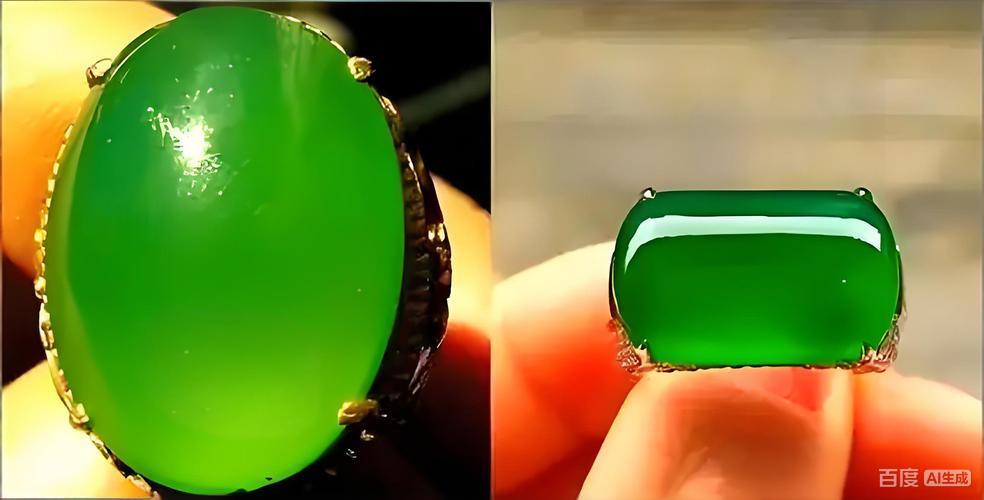
- Imperial Green (老坑种) — Vivid, even green with high translucency. The most valuable jadeite and one of the most valuable gems in the world.
- Lavender Jadeite — Soft purple-violet, popular for feminine pendants and bracelets. Increasingly sought-after.
- Ice Jadeite (冰种) — Nearly colorless with extreme translucency, like water-clear ice. Highly prized.
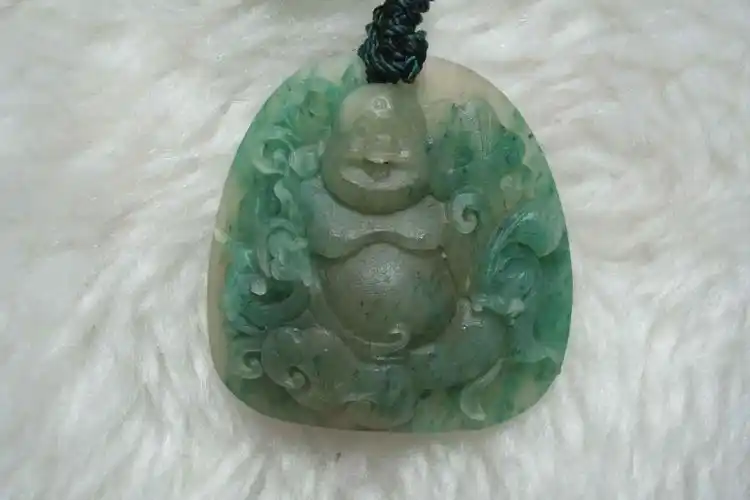
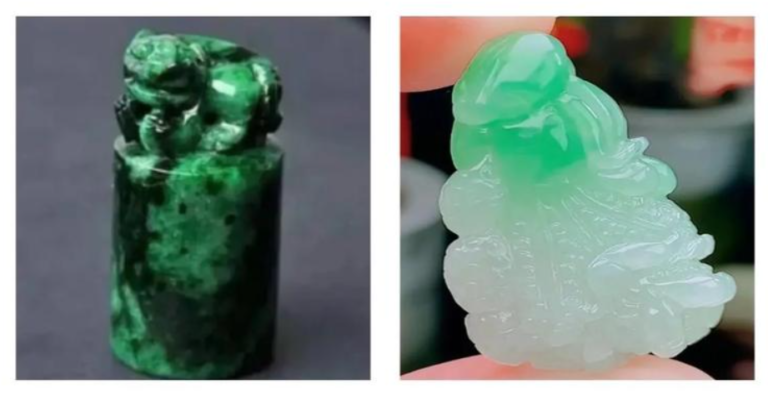
- Moss-in-Snow — White background with green patches, resembling moss on snow. Distinctive and collectible.
Jade vs Jadeite: Direct Comparison
| Feature | Nephrite (Jade) | Jadeite |
|---|---|---|
| Mineral family | Amphibole | Pyroxene |
| Hardness (Mohs) | 6.0–6.5 | 6.5–7.0 |
| Density | 2.90–3.10 g/cm³ | 3.20–3.40 g/cm³ |
| Toughness | ⭐⭐⭐⭐⭐ Exceptional | ⭐⭐⭐⭐ Good |
| Color vibrancy | Muted, earthy tones | Vivid, saturated colors |
| Transparency | Usually opaque to translucent | Can be highly translucent to near-transparent |
| Primary origin | China, Canada, Russia | Myanmar (Burma) almost exclusively |
| Historical use (China) | 5,000+ years | Since 18th century |
| Price range | $30–$10,000+ (varies widely) | $100–$1M+ (gem quality) |
| Market position | More accessible, traditional | Prestige, investment-grade gem |
| Durability for jewelry | Excellent (resists chipping) | Very good (harder but less tough) |
How to Tell Nephrite from Jadeite
Even experienced jade buyers can struggle to distinguish nephrite from jadeite by eye alone. Here are the most reliable indicators:
By Appearance
- Texture: Nephrite often has a waxy, silky appearance; jadeite tends toward a glassy or greasy luster
- Color: Jadeite is capable of producing more vivid, saturated greens and distinct lavenders that nephrite cannot match
- Translucency: High-translucency pieces are almost always jadeite; most nephrite is opaque to slightly translucent
By Weight
Jadeite is noticeably heavier than nephrite of the same size. If you have two similar-looking green pendants and one feels significantly heavier, it’s likely jadeite.
By Definitive Testing
The only way to be 100% certain is gemological testing — specifically FTIR spectroscopy (Fourier-transform infrared spectroscopy) or Raman spectroscopy. These tests are offered by gemological labs (GIA, NGTC in China) and are essential for high-value purchases. See our complete jade identification guide for all 7 home tests →
Which Is More Valuable: Nephrite or Jadeite?
In most cases, top-quality jadeite is more valuable than top-quality nephrite — by a significant margin. The most expensive jadeite pieces (Imperial Green, high translucency, large pendants or bangles) can sell for hundreds of thousands to over one million USD at auction.
However, this is not always the case:
- Exceptional mutton fat nephrite (top-grade white Hotan jade) can be extremely valuable — premium pieces sell for tens of thousands of dollars per kilogram
- Grade B or C jadeite (chemically treated) is worth very little, often less than average nephrite
- Antique nephrite carvings from imperial periods can be extraordinarily valuable due to historical and cultural significance
The real rule is: quality within the type matters far more than which type you have.
Which Should You Choose?
The right choice depends on what you’re looking for:
Choose Nephrite If:
- You want a more affordable entry point into genuine jade jewelry
- You prefer earthy, traditional aesthetics — creamy whites, dark greens, classic Chinese looks
- You value durability and toughness for everyday wear (nephrite resists chipping better)
- You’re interested in the deep historical and cultural significance of jade in China
- You’re buying carved figurines or decorative pieces (nephrite’s toughness makes it ideal for intricate carving)
Choose Jadeite If:
- You want vivid color, particularly that iconic bright green or rich lavender
- You’re making a significant investment in a high-value piece (Grade A jadeite appreciates in value)
- You prefer a more luminous, translucent appearance — the “ice” look
- You want the prestige associated with the most sought-after form of jade
- Budget is not a primary concern
A Quick Note on Dushan Jade and Other “Jades”
Beyond nephrite and jadeite, Chinese culture recognizes several other stones under the broad umbrella of “jade” (玉). The most notable is Dushan jade (独山玉) from Nanyang, Henan — a multicolored stone used in China since the Neolithic period. While technically neither nephrite nor jadeite, Dushan jade has legitimate cultural significance and is genuinely valued in the Chinese market.
Be cautious about stones marketed as “jade” that are actually serpentine, aventurine, glass, or dyed quartzite. These have no gemological connection to real jade. → Learn how to spot jade fakes →
Frequently Asked Questions
Is all green jade jadeite?
No. Both nephrite and jadeite can be green. Nephrite comes in dark spinach green, olive green, and muted mid-greens. Jadeite can achieve the vivid, emerald-like Imperial Green that nephrite cannot. If you see a piece described as “Imperial Green jade,” it should be jadeite — ask for a certificate confirming this.
Does “Burma jade” mean jadeite?
Yes. “Burmese jade” or “Burma jade” almost always refers to jadeite sourced from Myanmar (Burma), which is the world’s primary source of gem-quality jadeite. Authentic Burmese jadeite is highly valued; always verify with a gemological certificate for significant purchases.
Can I wear nephrite and jadeite together?
Absolutely. There’s no metaphysical or practical reason not to. Many jade enthusiasts collect and wear both — nephrite for its toughness and earthy energy, jadeite for its vivid color and prestige.
Why is jadeite more expensive than nephrite in most cases?
Jadeite is rarer and more concentrated in a single geographic source (Myanmar). Top-quality jadeite achieves visual qualities — extreme translucency, vivid saturated color — that nephrite simply cannot, making the best pieces exceptionally scarce. Supply restrictions from Myanmar have also reduced availability over recent decades, pushing prices higher.
Is Chinese jade always nephrite?
Historically, yes — Chinese jade culture was built on nephrite. But today, China is the world’s largest market for jadeite as well. “Chinese jade” can refer to either type; context and certification matter.
Summary: Jade vs Jadeite at a Glance
Both nephrite and jadeite are genuine jade — they’re just different stones with different characters. Nephrite carries China’s deepest cultural history, delivers exceptional toughness, and offers beautiful earthy tones at a range of price points. Jadeite brings vivid color, luminous translucency, and investment-grade prestige at the high end of the market.
Whichever you choose, prioritize quality within the type. A fine piece of nephrite will always outperform a poor piece of jadeite — and vice versa. When in doubt, buy from sellers who can provide provenance, type confirmation, and ideally a gemological certificate for higher-value pieces.
→ Learn how to identify real jade at home: 7 practical tests →
→ Complete Chinese Jade Guide: History, Types, and Cultural Significance →
→ Jade Meanings: Spiritual Symbolism and What Each Color Represents →