Jade Healing Properties and Benefits: What the Stone Can Do for You
For over 5,000 years, jade has been far more than a pretty green stone in Chinese culture. It has been worn for protection, carved into healing tools, and treasured as a bridge between the physical and spiritual worlds. But what are jade’s actual healing properties, and what can this ancient stone really do for you today?
This guide separates tradition from science, giving you a clear understanding of jade’s physical, emotional, and spiritual benefits — and practical ways to bring them into your daily life.
A Stone With 5,000 Years of Healing Tradition
Jade’s healing associations trace back to Neolithic China, where it was carved into ceremonial blades, burial suits, and amulets. Ancient texts describe jade as a stone that could preserve the body after death, protect the living from harm, and balance the body’s energies. The philosopher Confucius compared jade’s qualities to human virtues: its smoothness represented benevolence, its luster represented knowledge, and its durability represented courage.
In Traditional Chinese Medicine, jade was ground into powder for medicinal elixirs, carved into massage tools for circulation, and worn against the skin for continuous energetic benefit. While modern science doesn’t support jade as a cure for disease, its physical properties — thermal conductivity, smooth texture, and durability — create real effects when used as a wellness tool.
→ Learn the full history and cultural significance of Chinese jade →
Physical Healing Properties
1. Cooling and Anti-Inflammatory Effect
Jade has exceptionally high thermal conductivity and heat capacity — meaning it stays noticeably cool against the skin and warms up slowly. This physical property is the foundation of jade’s most commonly experienced “healing” benefit:
- Applying a cool jade stone to inflamed areas or tension headaches provides natural relief without chemicals.
- Jade rollers and gua sha tools use this cooling property to reduce facial puffiness and soothe irritated skin.
- The slow-warming quality means jade maintains therapeutic temperature longer than most other stones.
2. Jade Roller Benefits for Skin and Face
Jade facial rollers have become popular in skincare routines, and for good reason — they work through mechanical massage rather than mystical energy:
- Lymphatic drainage: Rolling in outward and downward motions helps move stagnant lymph fluid, reducing morning puffiness and under-eye bags.
- Improved circulation: The gentle pressure and rolling action increase blood flow to facial skin, giving a temporary healthy glow.
- Product absorption: Rolling after applying serum or moisturizer helps skincare products penetrate more effectively.
- Tension release: Rolling across the jaw, temples, and forehead eases muscle tightness that contributes to tension headaches and fine lines.
How to use: Keep your jade roller in the refrigerator for extra cooling benefit. Roll upward and outward on clean skin for 3–5 minutes daily. Always clean the roller after use to prevent bacteria buildup.
3. Cool Stone Therapy for Pain and Inflammation
Jade’s thermal properties make it useful as a natural cool compress for:
- Tension headaches (applied to the temples and forehead)
- Minor muscle inflammation (applied to the affected area)
- Hot flashes or night sweats (held in hand or placed on the chest)
- Eye strain and fatigue (cooled jade discs placed over closed eyes)
Unlike gel ice packs that can be too cold and cause tissue damage, jade cools gently and naturally — making it comfortable for extended use.
4. Gua Sha Facial Massage
Jade gua sha tools are flat, curved stones used for facial scraping massage. Benefits include:
- Stimulating microcirculation in facial tissue
- Smoothing fascia (connective tissue) that can contribute to wrinkles and sagging
- Relieving jaw tension and TMJ discomfort when used along the jawline
- Promoting a temporary lifting and contouring effect through improved circulation
Emotional and Mental Benefits
5. Calming and Grounding Effect
In crystal healing traditions, jade is considered a nurturing, protective stone that brings calm and emotional stability. While these effects are subjective, many people report that holding or wearing jade produces a sense of centeredness and quiet.
The mechanism may be partly physical: jade’s cool, smooth, weighty quality is inherently soothing to touch — similar to how worry stones or fidget objects work. Combined with 5,000 years of cultural association with wisdom and serenity, the stone can serve as a powerful mindfulness anchor.
6. Heart Healing and Emotional Balance
Green jade, in particular, is associated with the Heart Chakra and emotional processing:
- Traditionally believed to help release negative emotional patterns
- Used as a support stone during grief, heartbreak, or periods of emotional turbulence
- Associated with compassion, forgiveness, and self-acceptance
7. Mental Clarity and Decision-Making
Jade has long been called the “dream stone” and “stone of the mind.” Chinese scholars and officials historically kept jade objects on their desks, believing the stone helped clarify thinking, enhance wisdom, and support sound judgment. Modern practitioners sometimes use jade as a meditation focus — holding the stone while sitting quietly, using its weight and coolness as an anchor for attention. → Explore jade’s deeper spiritual meanings →
Spiritual and Metaphysical Properties
8. Protection and Good Fortune
Throughout Chinese history, jade has been worn as a protective talisman. Jade pendants, bangles, and rings were believed to:
- Absorb negative energy before it could reach the wearer
- Protect against accidents and misfortune (jade bangles were said to break to “take the hit” for the wearer)
- Attract good fortune, prosperity, and harmonious relationships
This protective quality is why jade is still given as a gift for new babies, new homes, and new beginnings.
9. Energy Balancing and Harmony
In TCM and Daoist philosophy, jade is believed to balance Yin and Yang energies in the body. Worn against the skin, it’s thought to:
- Harmonize the body’s energy field
- Promote the smooth flow of Qi through the meridians
- Help maintain equilibrium during stressful or chaotic periods
Jade Healing Properties by Color
Different jade colors are associated with different healing focuses:
| Color | Healing Focus | Best For |
|---|---|---|
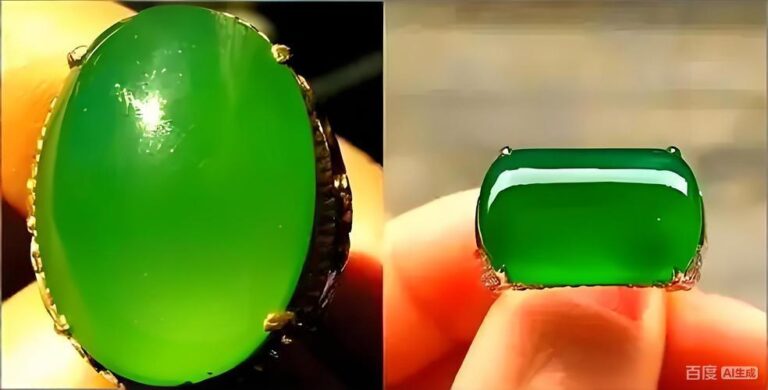
| Green Jade | Heart healing, vitality, growth | Emotional balance, compassion, physical recovery |
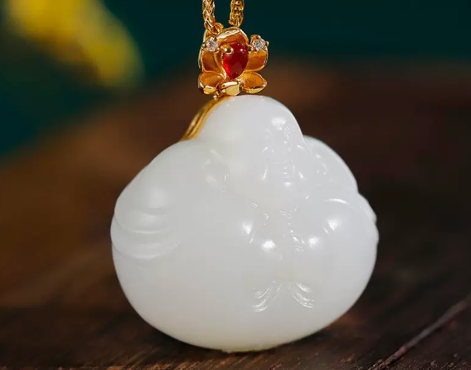
| White Jade (Mutton Fat) | Mental clarity, purification, peace | Meditation, focus, calming an overactive mind |
| Lavender Jade | Emotional healing, spiritual connection | Anxiety, emotional sensitivity, spiritual practice |
| Yellow/Golden Jade | Energy, confidence, abundance | Motivation, digestive health, prosperity mindset |
| Black Jade | Protection, grounding, absorption | Stress, negative environments, energetic shielding |
| Red Jade | Passion, courage, circulation | Motivation, vitality, overcoming fear |
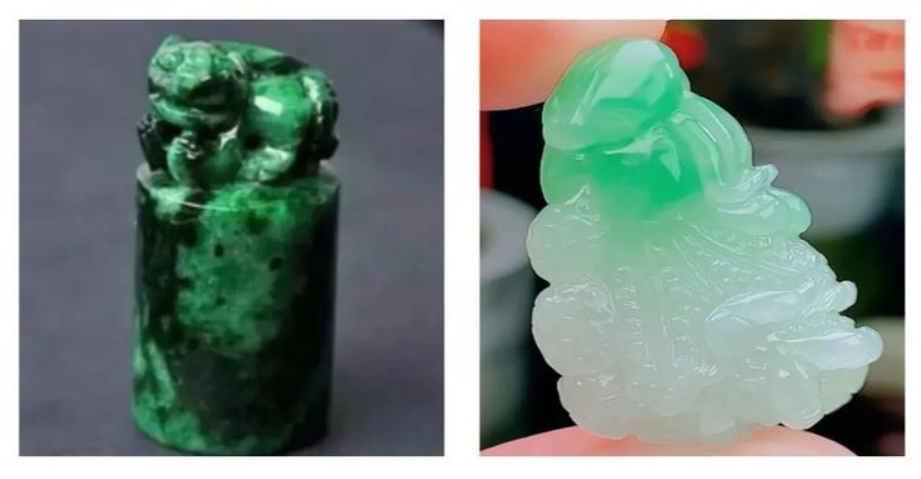
| Dushan Jade (Multi-Color) | All-around balance, regional power | General wellness, connection to Chinese earth energy |
→ Detailed guide to jade color meanings →
Nephrite vs. Jadeite: Does Healing Power Differ?
Both are genuine jade, but they have different energetic associations:
- Nephrite (Chinese jade): Considered more grounding, nurturing, and protective. The traditional “true jade” of Chinese culture. Associated with longevity, wisdom, and steady, reliable energy.
- Jadeite (Burmese jade): Considered more vibrant, uplifting, and energizing. Associated with abundance, mental clarity, and transformation. Imperial green jadeite carries the most intense energetic reputation.
→ Jade vs. Jadeite: What’s the difference? →
How to Use Jade for Healing
Wearing Jade (The Most Common Method)
Wearing jade as a pendant, bangle, or ring is the simplest way to benefit from the stone:
- Pendant: Worn near the heart for emotional healing or at the throat for clear communication
- Bangle or bracelet: Continuous skin contact; the traditional protective placement
- Ring: Constant contact with the hand meridians
→ Choosing a jade pendant: complete gift guide →
Jade in Your Environment
- Bedroom: White or green jade for restful sleep and peaceful energy
- Workspace: Green or yellow jade for clarity, focus, and prosperity
- Meditation space: Any color that resonates; hold during practice or place nearby
- Main entrance: Black or green jade for protective energy at the threshold → Jade Feng Shui placement guide →
Jade for Meditation
Hold a smooth jade stone in your palm during meditation. Focus on its weight and coolness as an anchor for your attention. Many practitioners find that jade’s grounding quality helps quiet mental chatter and deepen the meditative state.
What the Science Actually Says
Let’s be clear about what jade can and cannot do:
What jade actually does (physically):
- Provides a cool surface that can soothe inflammation and reduce puffiness
- Facial rolling mechanically improves lymphatic drainage and circulation
- The weight and texture can serve as a mindfulness anchor
- The act of self-massage (rolling, gua sha) relieves muscle tension
What jade does NOT do:
- There is no clinical evidence that jade cures diseases
- Jade does not emit measurable “healing vibrations” or energy fields beyond standard mineral properties
- Wearing jade is not a substitute for medical treatment
The benefits of jade are best understood as the combination of real physical properties (coolness, smoothness) with powerful psychological and cultural associations developed over millennia. Whether the healing comes from the stone itself or from the meaning we give it, the effect can be genuinely positive when approached with realistic expectations.
How to Choose Jade for Healing Purposes
If you’re selecting jade specifically for healing or wellness use:
- Choose genuine, untreated jade (Grade A) — treated jade (Grade B and C) has been chemically altered. → How to identify real jade →
- Select a color based on your intention — green for heart and balance, white for clarity, lavender for calm
- Trust your intuition — if a particular stone feels right to you, that’s more important than following color guidelines rigidly
- Keep it clean — wash your jade regularly with mild soap and water. → Jade care and cleaning guide →Complete beginner’s guide to Chinese jade →Complete beginner’s guide to Chinese jade →
→ How much does real jade cost? Price guide →
Frequently Asked Questions
How long does it take to feel jade’s healing effects?
Physical effects from jade rollers (reduced puffiness, improved circulation) can be felt immediately after use, though they’re temporary. Emotional and spiritual effects are subjective and build over time with consistent use and intention.
Does the jade need to be “cleansed” or “charged”?
In crystal healing traditions, jade is cleansed by rinsing under cool water, placing in moonlight overnight, or resting on a bed of sea salt. These practices are symbolic and ritualistic rather than scientifically necessary, but many people find the ritual itself meaningful and grounding.
Can I sleep with jade on?
Sleeping with a jade bangle or pendant is generally safe if the piece is smooth and securely fastened. Avoid sleeping with loose stones or sharp-edged pieces that could cause discomfort. The stone’s cooling quality may feel pleasant against the skin during sleep.
Is jade safe for children?
Jade is physically safe as it’s non-toxic and chemically stable. However, jade jewelry for young children should be smooth with no small parts that could detach and become choking hazards. Avoid long chains or cords for infants.
How do I know if my jade is “working”?
Physical benefits like improved facial circulation from jade rolling are visible and measurable. Emotional and spiritual effects are personal — if you feel calmer, more centered, or more protected while wearing your jade, then it’s working for you. The stone’s meaning is, in large part, what you make of it.
Bottom Line
Jade’s healing properties are rooted in 5,000 years of tradition and real physical characteristics — thermal conductivity, smooth texture, and durability — that produce genuine, observable effects. The spiritual dimension adds depth to the experience, but even the purely physical benefits make jade a meaningful wellness tool.
Whether you wear it for protection, roll it across your face for lymphatic drainage, or simply hold it as a reminder to breathe and stay grounded, jade has earned its reputation as a healing stone through history, culture, and practical utility.