Jade Feng Shui: Meanings, Placement, and Which Jade to Choose
In Chinese tradition, jade and feng shui have been intertwined for thousands of years. Long before feng shui became associated with furniture arrangement and lucky plants, jade was already the most powerful protective stone in Chinese culture — a conduit for positive energy, a guardian against negative forces, and a symbol of the highest virtues.
Today, jade remains one of the most popular feng shui stones in the world. But with so many types, colors, and carvings to choose from, how do you select the right jade for your specific intentions? This guide covers everything you need to know about jade feng shui — from symbolic meanings and energy properties to placement guidance and how to choose the jade that resonates with your goals.
New to Chinese jade? Before exploring its feng shui properties, get the essentials in our complete beginner’s guide to Chinese jade →
New to Chinese jade? Before exploring its feng shui properties, get the essentials in our complete beginner’s guide to Chinese jade →
Why Jade Is Central to Chinese Feng Shui
Feng shui (风水) is the ancient Chinese art of harmonizing environments to optimize the flow of qi — life energy — for health, prosperity, and well-being. Within this system, certain natural materials are considered especially potent carriers of beneficial energy.
Jade holds a unique position among these materials. In Chinese philosophy, jade embodies the five cardinal virtues: benevolence (仁), wisdom (智), courage (勇), righteousness (义), and purity (洁). The philosopher Confucius described jade’s qualities as a mirror of moral perfection. For millennia, emperors, scholars, and ordinary people alike have worn, displayed, and gifted jade as a tangible connection to these ideals.
From a feng shui perspective, jade is believed to:
- Absorb and purify negative energy from its environment
- Generate and amplify positive qi around the wearer or in a space
- Protect against misfortune, illness, and malevolent influences
- Attract prosperity, longevity, and harmonious relationships
- Serve as a bridge between heaven and earth — connecting the material and spiritual realms
Jade Color Meanings in Feng Shui
Color is central to feng shui energy work, and jade comes in a remarkably wide range of colors — each carrying distinct energetic associations.
Green Jade
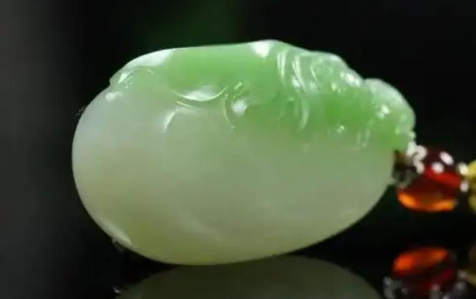
Green is jade’s most iconic and spiritually significant color. In feng shui, green corresponds to the Wood element, which governs growth, vitality, health, and new beginnings. It’s associated with the liver and gallbladder in traditional Chinese medicine.
Best for: Health, vitality, career growth, new projects, harmonious family relationships
Bagua area: East (family/health) and Southeast (wealth/abundance)
Jade type: Both nephrite (spinach green, apple green) and jadeite (Imperial Green)
White Jade
White jade — including the famous “mutton fat” nephrite (羊脂玉) — corresponds to the Metal element. Metal energy relates to clarity, precision, righteousness, and the ability to set and achieve goals. White jade is also strongly associated with purity and protection.
Best for: Mental clarity, decision-making, protection, spiritual practice, grief and transition
Bagua area: West (creativity/children) and Northwest (helpful people/travel)
Jade type: High-grade nephrite (Hotan white jade)
Lavender Jade
Lavender and purple jade carry exceptional spiritual energy in feng shui. Purple corresponds to high spiritual vibrations, intuition, and wisdom. In Chinese culture, purple (紫) has long been associated with celestial and imperial energy — the Forbidden City’s original name was the “Purple Forbidden City” (紫禁城).
Best for: Spiritual development, meditation, intuition, inner peace, and higher consciousness
Bagua area: Center (health/overall harmony) and Southwest (love/relationships)
Jade type: Lavender jadeite (increasingly rare and valuable)
Yellow and Orange Jade
Yellow jade resonates with the Earth element — grounding, stability, nourishment, and abundance in practical matters. It’s one of the best feng shui stones for attracting wealth and earthly blessings.
Best for: Financial stability, grounding, practical success, digestive health (Earth governs the stomach/spleen in TCM)
Bagua area: Center and Southwest (earth element zones)
Jade type: Yellow nephrite, yellow-brown Dushan jade
Black Jade
Black jade carries Water element energy and is considered one of the most powerful protective stones in feng shui. It creates a strong energetic shield, absorbing and transmuting negative energy.
Best for: Protection, psychic shielding, releasing fear, deep transformation, overcoming obstacles
Bagua area: North (career/life path)
Jade type: Black nephrite, black jadeite
Red and Brown Jade
Red jade activates Fire element energy — passion, motivation, courage, and life force. It’s a powerful stone for those who need to overcome lethargy, fear, or procrastination.
Best for: Passion, courage, motivation, career ambition, romantic energy
Bagua area: South (fame/recognition)
Jade type: Red-brown nephrite, some varieties of Dushan jade
For a deeper dive into one of China’s most unique jade varieties — known for its multi-colored character — read about Dushan jade from Nanyang, China →
For a deeper dive into one of China’s most unique jade varieties — known for its multi-colored character — read about Dushan jade from Nanyang, China →
Jade Carving Symbols and Their Feng Shui Meanings
In Chinese culture, the shape and subject of a jade carving matters as much as the stone itself. Each traditional motif carries centuries of accumulated symbolic meaning:
| Symbol | Chinese Name | Feng Shui Meaning | Best For |
|---|---|---|---|
| Ruyi Scepter (如意) | Rú yì | “As you wish” — fulfillment of all desires | Wish fulfillment, authority, career |
| Laughing Buddha (布袋和尚) | Maitreya / Bùdài | Joy, abundance, contentment, good fortune | Happiness, wealth, well-being |
| Dragon (龙) | Lóng | Power, protection, imperial authority, yang energy | Protection, ambition, success for men |
| Phoenix (凤凰) | Fènghuáng | Rebirth, beauty, virtue, feminine power | Good omens, grace, success for women |
| Pixiu (貔貅) | Pí xiū | Wealth accumulation — draws money in, never lets it out | Financial gain, investment, business |
| Pi Xiu (alternative) | Bì xié | Ward off evil spirits | Protection, new ventures |
| Koi Fish (鱼) | Yú | Abundance (yú = fish = surplus/余) | Wealth, prosperity, year-end blessings |
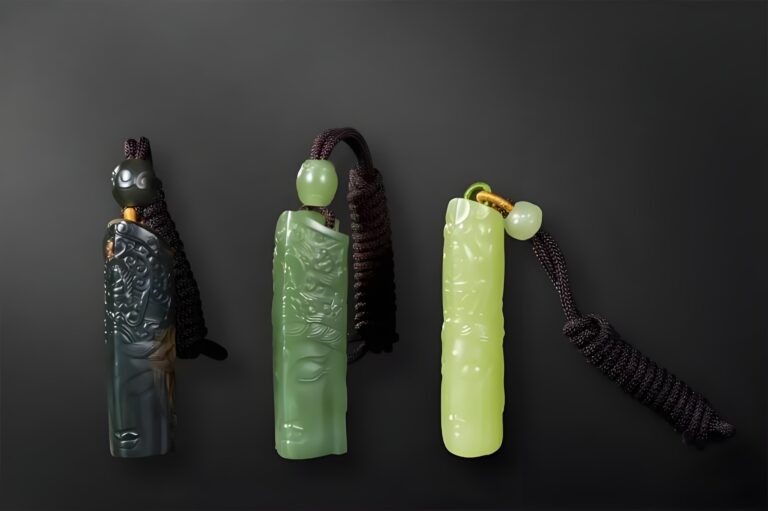
| Bamboo (竹) | Zhú | Resilience, integrity, upward growth | Perseverance, academic success |
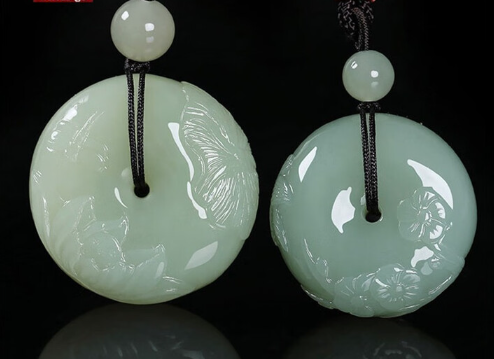
| Lotus (莲花) | Lián huā | Purity rising from difficulty; spiritual awakening | Spiritual growth, new beginnings after hardship |
| Bat (蝙蝠) | Biān fú | Five blessings: wealth, health, long life, virtue, good death | Overall fortune, blessings |
| Guan Yin (观音) | Guān yīn | Compassion, mercy, protection, maternal energy | Protection, healing, inner peace |
| Twelve Zodiac Animals | 十二生肖 | Your personal guardian energy based on birth year | Personal protection, luck alignment |
How to Place Jade for Feng Shui
How you place or wear jade is as important as the jade itself. Here are the core placement principles:
Wearing Jade (Personal Energy)
Jade worn close to the body creates a personal energy field. Traditional Chinese wisdom holds that jade and its wearer “grow together” — the stone slowly absorbs the wearer’s energy and becomes attuned to them over years of wear.
- Left wrist: The left side is the “receiving” side. A jade bangle on the left wrist is thought to draw in positive energy and protect the heart.
- Chest / neck (pendant): Closest to the heart center. Jade pendants are worn against the skin to maintain energetic connection.
- Pixiu bracelet: Traditionally worn on the left wrist with the head pointing away from the body (outward), symbolizing the beast going out to hunt for wealth and bringing it back.
Home Placement by Bagua Area
The bagua map divides a space into nine sectors, each governing a different life area. Placing jade in the appropriate sector amplifies its energy:
| Bagua Area | Direction | Life Area | Best Jade Color/Symbol |
|---|---|---|---|
| Wealth (Xun) | Southeast | Prosperity, abundance | Green jade, Pixiu, fish carvings |
| Career (Kan) | North | Life purpose, career | Black jade, dragon carvings |
| Relationships (Kun) | Southwest | Love, marriage, partnerships | Lavender/pink jade, paired mandarin duck carvings |
| Family/Health (Zhen) | East | Family harmony, physical health | Green jade, bamboo carvings |
| Fame (Li) | South | Reputation, recognition | Red jade, phoenix carvings |
| Creativity (Dui) | West | Children, creative projects | White jade, lotus carvings |
| Knowledge (Gen) | Northeast | Wisdom, self-cultivation | White/lavender jade, Guan Yin |
| Helpful People (Qian) | Northwest | Travel, mentors, support | White jade, ruyi scepter |
| Center (Tai Ji) | Center | Overall health, balance | Yellow jade, laughing Buddha |
Entryways and Protective Placement
Jade placed near the main entrance of a home acts as a protective guardian. A carved jade dragon or Guan Yin figure near the front door is a traditional ward against negative energy entering the home. Avoid placing jade on the floor — it should always be elevated, preferably at eye level or on a stand.
Which Jade Is Right for Your Feng Shui Goals?
Here’s a quick decision guide:
| Your Goal | Recommended Jade | Color | Symbol/Form |
|---|---|---|---|
| Attract wealth | Jadeite or nephrite | Green or yellow | Pixiu, fish, or ruyi |
| Protect home/family | Black or white nephrite | Black or white | Dragon, Guan Yin |
| Improve health | Green nephrite | Green | Bamboo, simple cabochon |
| Deepen spiritual practice | Lavender jadeite | Lavender/purple | Guan Yin, lotus |
| Career advancement | Green jadeite (quality piece) | Imperial green | Dragon, bamboo |
| Love and relationships | Lavender or pink jade | Lavender/pink | Mandarin ducks, heart shape |
| Overall luck and joy | Yellow or green nephrite | Yellow/green | Laughing Buddha, Maitreya |
Caring for Your Feng Shui Jade
From a feng shui perspective, jade accumulates both positive and negative energies over time. Regular cleansing keeps the stone’s energy clear and vibrant:
- Running water: Hold the jade under cool running water for 1–2 minutes with the intention of releasing accumulated negative energy. Pat dry with a soft cloth.
- Sunlight: Brief exposure (15–30 minutes) to morning sunlight recharges the stone’s positive energy. Avoid prolonged UV exposure, which can fade some colored jades.
- Moonlight: Setting jade in moonlight overnight (especially full moon) is considered a gentle, deep cleansing method that is safe for all jade types.
- Sound: The vibration of singing bowls or bells is used to clear and re-energize jade in Tibetan-influenced traditions.
Also important: never let others handle your personal jade piece without your permission. In Chinese tradition, a jade piece that has been “worn in” by an owner carries their personal energy — casual handling by strangers disrupts this connection.
Frequently Asked Questions
Is any jade good for feng shui, or does quality matter?
Quality matters — but perhaps not in the way you’d expect. What matters most from a feng shui standpoint is that the jade is genuine natural stone (not glass or plastic), is free from treatments that alter its natural energy (Grade A, untreated), and resonates with you personally when you hold it. An average-quality piece of real nephrite is far more energetically potent than an expensive piece of Grade B or C treated jadeite.
Can I give jade as a feng shui gift?
Yes — jade is one of the most auspicious gifts in Chinese tradition. A jade pendant given with the right intention carries the giver’s blessings for the recipient. The most common gifting occasions are birthdays, new births, weddings, business milestones, and the Lunar New Year.
Should I buy a specific animal carving based on my Chinese zodiac?
Many people do, and it’s a meaningful tradition. Your zodiac guardian animal (本命佛, the Buddha associated with your birth year) carved in jade is considered especially powerful personal protection. However, there’s no strict rule — choose carvings whose symbolism resonates with your current life goals.
What if my jade cracks or breaks?
In Chinese belief, if a jade piece breaks — especially unexpectedly — it is said to have “taken a hit” on your behalf, absorbing misfortune that was meant for you. This is not considered bad luck; rather, the jade has fulfilled its protective purpose. Broken jade should be respectfully disposed of (returned to the earth, or thanked and released into running water).
Getting Started With Jade Feng Shui
Jade feng shui is not complicated once you understand the basic principles. Start simple: choose one piece of genuine jade in a color that aligns with your primary intention, wear it or place it in the relevant bagua area of your home, and observe how you feel over the following weeks. Before you purchase, check out our 2026 jade price guide to understand what to expect at different budget levels.
The most important element is not the most expensive piece — it’s a genuine stone chosen with clear intention and treated with consistent respect.
→ Discover the complete guide to Chinese jade types and history →
→ Learn how to verify you have genuine jade — not an imitation →
→ Compare nephrite vs jadeite: which type is right for you? →